Photographing a Duo: Composition Lessons from Twin Portraits
Two people in one frame changes every decision, from lens to light to posing. Lessons we apply when photographing duos and twins.
Rich Prince Media · · 5 min read
Photographing one person is a conversation. Photographing two is a negotiation. Every choice, from where they stand to which lens you use, has to work for both people at the same time, and for the relationship between them.
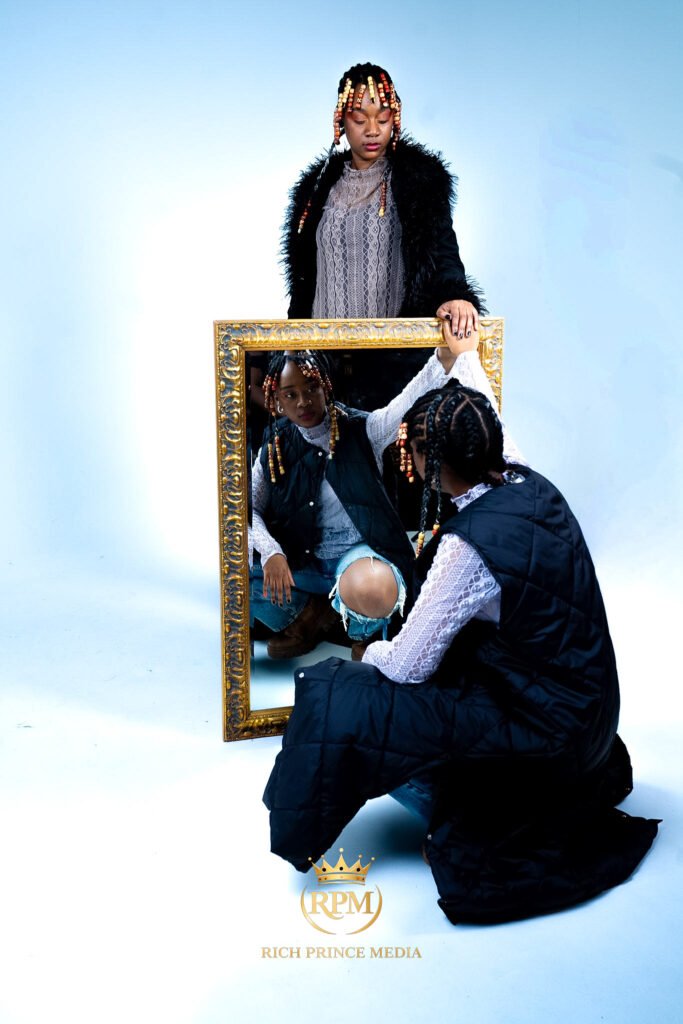
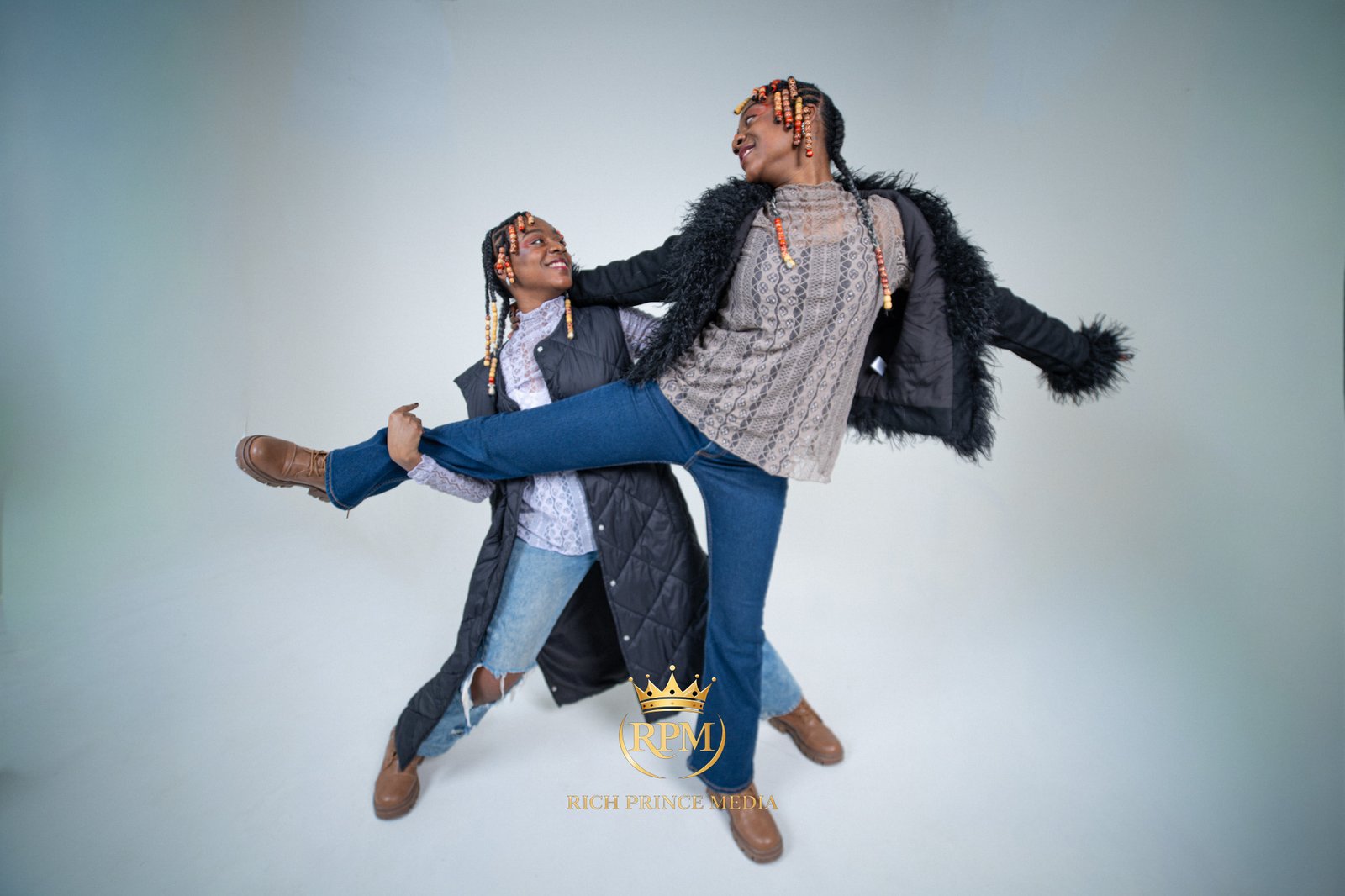
Duos are common in music, and twins are a special case of the duo. When we photographed Gem Shadou, the twin sisters Cece and Joce, the mirrored, twin compositions were central to the look. Here are the composition principles we rely on with any pair, and what twins in particular teach you.
Decide what the relationship is
Before posing anyone, decide what the image should say about the two people. Are they a united front? Two sides of one idea? Equals, or a leader and a partner? The answer shapes everything else.
- United: close together, similar posture, both facing the lens.
- Contrast: different heights, different directions, different energy.
- Connection: looking at each other, touching, sharing a moment.
For an act that presents as a unit, like twins, the united and mirrored approaches feel natural. For a duo with distinct roles, too much symmetry can flatten their differences.
Symmetry and mirroring
Mirrored compositions are powerful because the eye finds them immediately. Two people, matching poses, placed evenly either side of the centre line. With twins, the effect is even stronger, because the faces themselves repeat.
A few things make symmetry work:
- A precise centre. Use a centred camera position and level it. A slightly tilted symmetrical frame looks like a mistake.
- Mirrored, not copied, poses. If one person leans left, the other leans right. Copying the pose exactly reads as two separate photos.
- Matching distance from camera. If one person is even a little closer, they will look bigger and the balance breaks.
- Small differences on purpose. A hand placed differently or a slight head tilt keeps it human rather than robotic.
Spacing
The gap between two people is part of the composition. Too far apart and the frame splits into two pictures. Too close and they merge into one shape. We adjust in small steps and check the monitor, watching the negative space between them as carefully as the people.
Overlapping shoulders slightly, or one person a half step behind the other, can create depth without losing balance.
Heights and levels
With two people of different heights, you have choices. Stand them as they are and accept the difference, use posture to bring heads closer in level, or use the environment: a step, a stool, one seated and one standing. Twins remove much of this problem, which is part of why mirrored compositions are so effective with them.
A useful guide: try to keep eyes within a comfortable range of each other so the viewer does not have to jump up and down the frame.
Focus and depth of field
This is the technical trap with duos. A shallow depth of field looks beautiful on one face, and on two faces at different distances it leaves one of them soft. Options:
- Place both subjects on the same plane, the same distance from the lens.
- Stop down the aperture to give enough depth to cover both.
- Step back and use a longer lens, which can help both faces fall within the focus range.
Check focus on both faces at full magnification before moving on. A great expression is wasted if one person is slightly out of focus.
Lens choice
Wide lenses distort near the edges of the frame. In a single portrait, the subject is often in the middle. In a duo, the subjects are usually off-centre, which is exactly where that distortion lives. One person can end up looking wider than the other. For close duo portraits we tend toward moderate to longer focal lengths, and keep wide lenses for environmental frames where the location matters as much as the people.
Lighting two faces
A single key light placed for one person may leave the other in shadow or create unflattering angles. Common solutions:
- A large, soft source placed centrally, so it reaches both faces evenly.
- Two matched lights, one for each person, for symmetrical setups.
- Careful placement so one person does not cast a shadow onto the other.
When the styling has a strong tone, such as gold, the lighting should flatter it. Metallic and warm fabrics change dramatically depending on light direction and quality, so we test before the main setup.
Full length matters
Duos are often photographed from the waist up because it is easier. But full-length portraits show styling, posture and the relationship between bodies, all of which tell the story of a pair. For music acts, full-length images are also more useful for posters and press layouts. We always plan for them.
Direct them as a pair
Finally, direction. Give instructions to both people together, then adjust individually. Let them talk to each other between frames. Some of the best duo images come from the moments when two people forget the camera and react to each other.
Our photography sessions for artists are built around this mix of planned composition and room for real moments.
If you are a duo, a group, or managing one, and you want images that show what makes the pairing work, we would be glad to talk it through. Get in touch and tell us about the act.