Cinema camera or mirrorless: when the ARRI actually matters
We shoot on ARRI ALEXA, and we still do not think you always need one. When a cinema camera earns its place, and when a smaller camera is the better call.
Rich Prince Media · · 5 min read
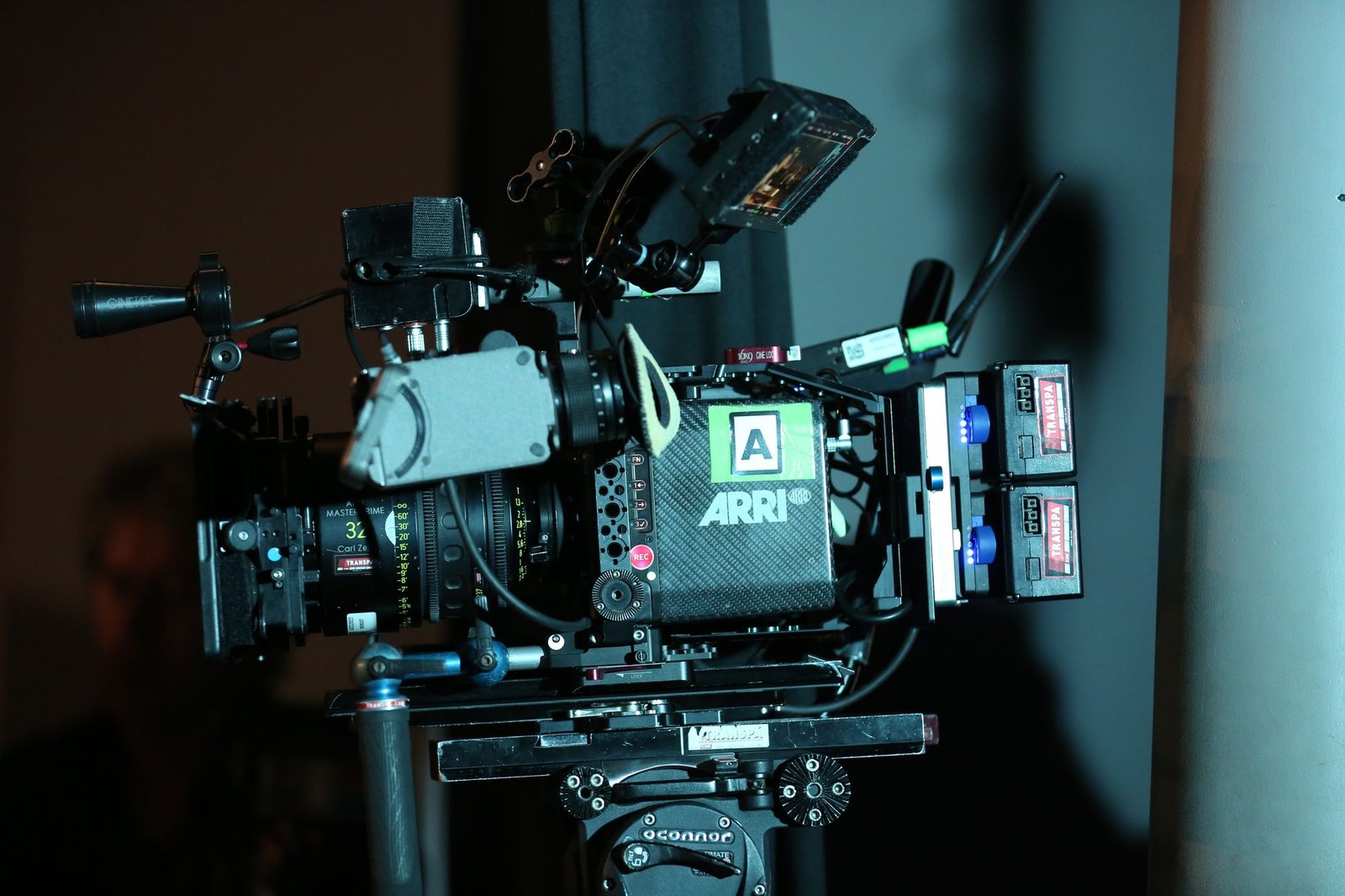
We own and shoot on ARRI ALEXA cinema cameras, so you might expect us to say you always need one. We don't. Modern mirrorless cameras are remarkable, and for plenty of projects they are the sensible choice. The real question is when the difference becomes visible to your audience, and when it matters to the production itself.
Here is how we think about it after three decades of watching formats come and go.
What the camera actually changes
People often assume a cinema camera means "higher resolution". That is rarely the point. Many mirrorless cameras record at resolutions equal to or beyond what most deliveries need. The differences that matter are elsewhere.
Highlight handling and dynamic range
Dynamic range is the span between the darkest and brightest detail a camera can hold in one frame. Cinema cameras are especially known for how they treat highlights: a bright window, a sunlit face, a stage light. Instead of clipping harshly to flat white, the brightness rolls off gradually, the way our eyes expect. It is one of the main reasons ARRI images are so often described as filmic. It is subtle, but audiences feel it, especially on faces.
Skin tones and colour
Colour science is how a camera interprets light into colour. ARRI built much of its reputation on skin tones that look natural across a wide range of complexions and lighting conditions. For beauty, fashion, music and any work centred on people, this is often the deciding factor. It also gives the colourist more room in the grade, which is where much of the final look is made.
Recording formats
Cinema cameras record to robust formats, often raw or high-bitrate codecs designed to stand up to heavy grading and visual effects. Mirrorless cameras have improved a great deal, and many now offer raw or high-quality internal recording, but there can be trade-offs in heat, recording limits or media.
The production reasons nobody mentions
The image is half the story. The other half is how the camera behaves on set.
- Reliability over long days. Cinema cameras are built to run for hours without overheating, in heat, cold or rain, on professional power systems.
- Professional connections. Timecode, full-size video outputs and proper audio inputs make multi-camera shoots and syncing simpler.
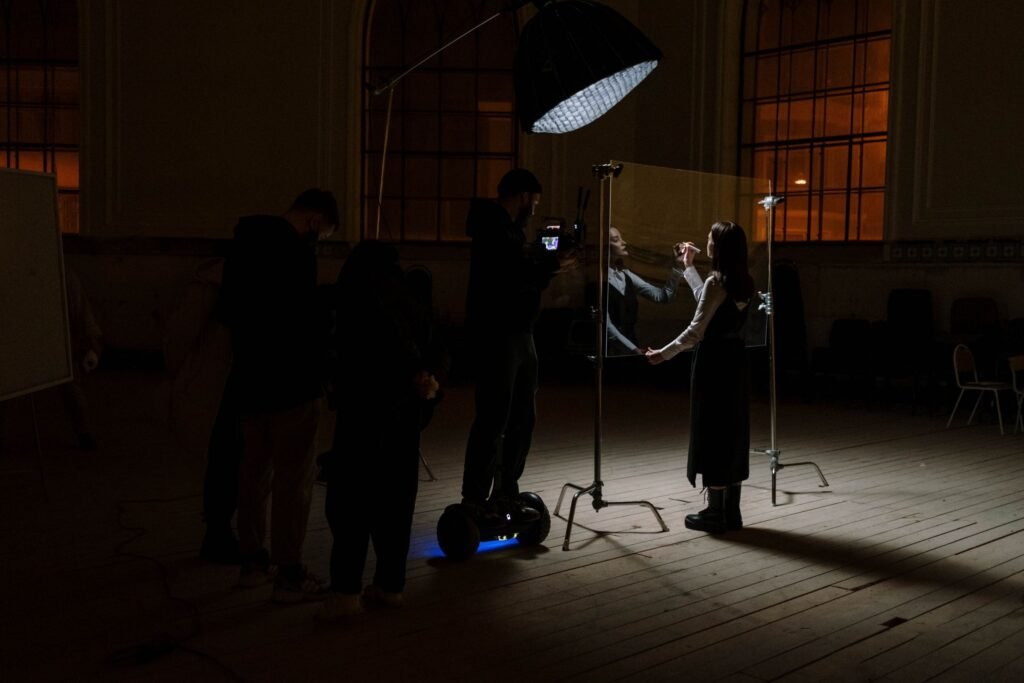
- Ergonomics for a crew. A cinema camera is designed to be run by a team: a focus puller on a wireless follow focus, a camera assistant managing media, a director watching a monitor. On our sets, wireless director monitors let the client see exactly what we are capturing as we capture it.
- Lens mounts. Cinema cameras take cinema glass, like the anamorphic and spherical primes we carry, without compromise.
That last point is worth stressing. Lens choice often shapes the look more than the camera body does. A great lens on a decent camera often looks better than a mediocre lens on a great camera. Anamorphic lenses, with their oval bokeh, horizontal flares and wider frame, create a character no sensor can produce on its own.
When mirrorless is the right answer
We use smaller cameras when they serve the project better. Common reasons:
- Small spaces or discreet filming. A tight car interior, a crowded event floor, a documentary moment where a large camera would change how people behave.
- Gimbals, crash cams and special rigs. When weight matters, or when a camera might get damaged.
- Run-and-gun content. Quick social pieces where speed and mobility matter more than the last bit of image quality.
- Budget. If the budget can only stretch to one upgrade, we would usually rather spend it on lighting, sound or an extra shoot day than on the camera body.
For event coverage, for example, several smaller cameras on a multi-cam setup may capture more of the day than a single cinema camera could.
When the ARRI actually matters
We recommend a cinema camera when:
- Faces are the product. Music videos, fashion, beauty, artist portraits and interviews where the person is the story.
- The footage will be graded heavily, or the treatment calls for a distinct, designed look.
- It will play on large screens, at events, in cinemas or on broadcast, where flaws become obvious.
- The scenes are high contrast, such as bright exteriors, mixed lighting, or night scenes lit by practical sources.
- The production is complex, with dolly moves, jib shots, a full crew and a director who needs to see everything live.
- The brand needs to look premium, and the video will sit next to big-budget work in the same feed or ad break.
On a music video shot on a dolly with anamorphic glass and controlled lighting, the cinema camera is doing work you will see in every frame. On a quick behind-the-scenes clip for stories, it may be wasted.
What to ask your production team
Instead of asking "what camera do you use?", ask "why that camera for this project?" A good answer will mention the look, the lenses, the lighting, the delivery platforms and the practical demands of the shoot. A weak answer will just quote specifications.
The camera is a tool. It matters, sometimes a lot, but it is one tool among several. Lighting, lenses, art direction, performance and the grade are what audiences actually see, and they all have to be working together.
If you are trying to decide what level of kit your next project needs, we are glad to give you an honest view, even if that means recommending something smaller. Talk to us.